Board & Pin


Why this dough is stiff
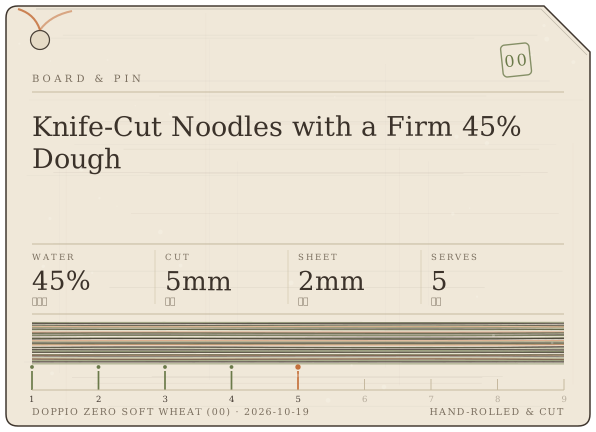
Two eggs and 80 g of water against 400 g of flour gives 45% hydration, which is on the low side for an egg dough. The stiffness is the point: a soft dough cut at 5 mm collapses in the pot and comes out like a ribbon, and knife-cut noodles are supposed to have a spine.
The dough will resist the rolling pin for the first three passes. Rest it again for ten minutes if it will not extend beyond 40 cm.
Folding with cornstarch, not flour
Dust the 2.0 mm sheet with cornstarch before folding. Cornstarch does not hydrate into gluten the way wheat flour does, so it stays as a dry slip layer between the folds and rinses off in the pot.
Fold into a flat roll 5 cm wide and press the fold lines down lightly. The roll has to be flat, not round; a round roll makes the outer layers longer than the inner ones and the strips come out wedge-shaped.
The cleaver cut
Cut at 5 mm with a Chinese cleaver or a heavy chef's knife, one stroke per cut, starting from the open end and working back toward the folds. Cut the whole roll in one continuous run without stopping.
Stopping halfway leaves a deeper crease at that point, and every strip from there on has a thin spot that breaks in the water.
Cooking and the sauce
Three and a half minutes in a large pot, then rinse briefly in warm water — this is the one Western-adjacent technique here that comes from the Chinese side of the site, and it stops the starch on the surface from gluing the noodles together.
Top with the zhajiang straight from the wok, still hot, and add the raw cucumber matchsticks and spring onion on the side. The cool crunch against the hot sauce is not optional; it is what balances the salt in the fermented paste.