Board & Pin


Ricotta as a dough ingredient
Drained ricotta is about 72% water, 18% fat and 8% protein. In the dough the fat coats the flour particles and shortens the gluten, so the cavatelli stay tender even though the sheet is a solid 10 mm rope rather than a thin wall.
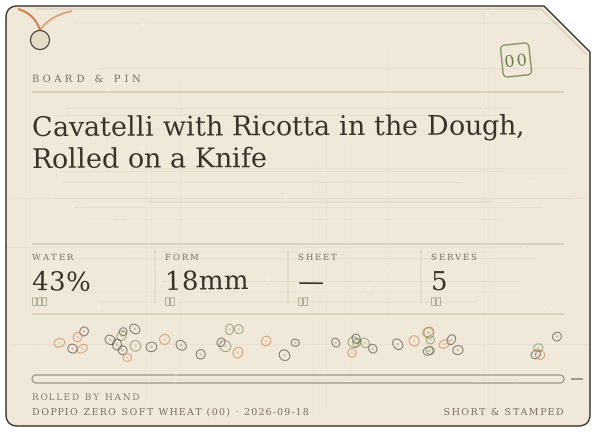
The ricotta is not counted in the 43% hydration figure because it has been drained for twelve hours and behaves as a solid. If you add it wet from the tub, the dough will need an extra 40 g of flour and the cavatelli will taste of nothing but water.
Mixing a dough with cheese in it
Rub the ricotta into the flour with your fingertips until the mixture looks like coarse breadcrumbs and no pieces of cheese are visible. This takes about two minutes and it is the difference between a smooth dough and one with pale lumps that split when you roll the rope.
Then add the water in three additions. A ricotta dough absorbs unevenly and the last 20 g will seem like too much right up until it does not.
The knife roll
Roll a 10 mm rope, cut 10 mm beads, then press each bead with two fingers and drag it toward you across a floured board with the back of a table knife, finishing with the fingers. The knife backs give the ridged surface; the final finger drag curls the ends inward.
Cavatelli should be 18 mm long with a hollow and a ridge. The hollow matters more than the ridge: it is where the sausage sauce collects.
Drying and the ricotta clock
A ricotta dough is more perishable than a water dough. Dry the cavatelli for 24 hours, then use within a week, or freeze them at the 12-hour mark and cook from frozen.
Never leave a ricotta dough at room temperature overnight. Water doughs are forgiving; this one is not.